
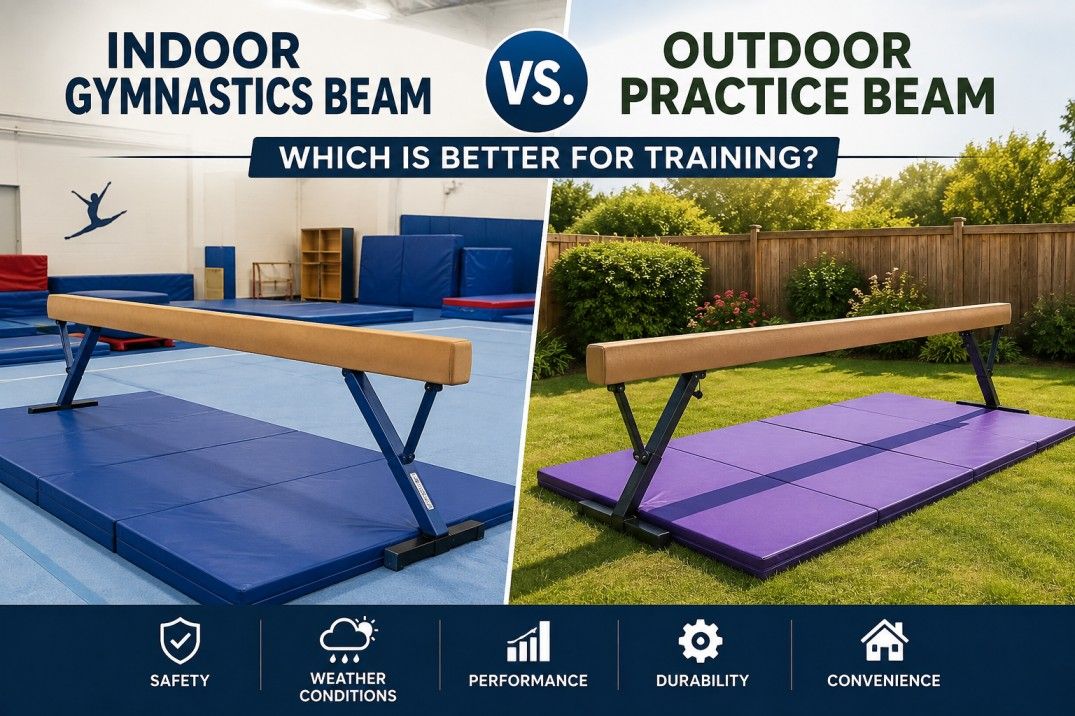
Choosing the right Gymnastics Beam can significantly affect the comfort, safety, and consistency of your training. One popular option, the indoor balance beam, offers a controlled environment, while outdoor practice setups provide more space and flexibility. The better choice depends on where you train, your skill level, available equipment, and how often you practice.
Training Environment and Surface Conditions
The biggest difference between indoor and outdoor training is environmental control. Indoor spaces usually provide a stable, predictable surface with protection from wind, rain, direct sunlight, and temperature changes. This consistency can help gymnasts focus on technique rather than adapting to changing conditions.
An indoor balance beam is particularly useful for structured practice sessions. Whether you are working on walks, turns, jumps, handstands, or more advanced routines, a controlled environment can make repetition easier and more consistent.
Outdoor training, on the other hand, can be appealing for home practice or when indoor space is limited. A backyard, driveway, or other suitable area may provide additional room for warm-ups and supporting exercises. However, the surface underneath the equipment must be level and appropriate for gymnastics practice. Uneven ground can affect stability and increase the risk of slips or falls.
Weather is another important consideration. Moisture can make surfaces slippery, while prolonged sun exposure may affect certain materials over time. For this reason, outdoor equipment should be selected and maintained with durability and weather exposure in mind.
Safety: Which Option Offers Better Protection?
Safety should always be the first priority when choosing where to train. An indoor setup generally makes it easier to create a dedicated practice area with proper flooring and protective equipment. A low practice beam can also help beginners build confidence while staying closer to the ground.
Outdoor practice can be safe, but it requires more preparation. Before every session, the area should be checked for moisture, debris, uneven surfaces, and obstacles. The equipment should also be positioned securely to prevent movement during use.
Landing protection is equally important. A useful resource on this topic is the article “Why High-Quality Gymnastics Mats Are Essential for Safe Training,” which emphasizes the importance of using appropriate protective mats to support safer gymnastics practice.
Whether training indoors or outdoors, appropriate mats and adequate supervision can help create a safer environment, especially when practicing new or difficult skills.
Durability and Equipment Maintenance
Indoor equipment generally faces fewer environmental challenges. It is protected from rain, humidity, direct sunlight, dirt, and other outdoor elements. As a result, an adjustable gymnastics beam used indoors may require less frequent cleaning and maintenance.
Outdoor equipment can experience greater wear depending on its materials and how often it is exposed to the elements. Metal components may be affected by moisture, while certain covers or padding materials can deteriorate after prolonged exposure to sunlight and changing temperatures.
If you regularly train outdoors, storing the equipment inside after use or using a suitable protective cover may help extend its lifespan. Checking the frame, legs, connectors, and surface before each session is also a good habit.
Convenience and Training Flexibility
Indoor training is ideal for gymnasts who want a consistent practice routine. A dedicated space allows equipment to remain set up and ready for use. This can be especially convenient for regular training sessions.
However, not every home has enough indoor space for a full-sized setup. Outdoor practice may therefore be more practical for families with limited interior space. A portable balance beam can be moved into an open area when needed and stored afterward.
Portability is a major advantage for outdoor training. Lightweight or foldable designs can make it easier to create a temporary practice area. Brands such as AirTumble may appeal to home users looking for equipment designed around convenient practice and storage.
The main drawback is setup time. Each outdoor session may require preparing the area, positioning the equipment, checking stability, and placing protective mats. Indoor setups often require less preparation once a dedicated training space is established.
Performance and Skill Development
Both environments can support skill development when the equipment is stable and the training area is properly prepared. The key difference is consistency.
Indoor practice allows gymnasts to repeat movements under similar conditions. This can be beneficial when refining body position, balance, timing, and routine sequences. A competition-style beam or other appropriately designed training surface may also help experienced gymnasts prepare for more structured practice.
Outdoor practice introduces more variables. Slight changes in temperature, wind, lighting, or ground conditions may affect comfort and concentration. While this does not automatically make outdoor training ineffective, it means gymnasts should pay closer attention to conditions before beginning.
For beginners, indoor practice is often the easier environment for developing confidence because distractions and environmental changes are limited. More experienced gymnasts may enjoy having both options, using indoor training for technical consistency and outdoor sessions when additional space is useful.
Cost and Space Considerations
Your available space may ultimately determine which option is more practical. Creating an indoor gymnastics area may require dedicating a room, basement, garage, or other suitable space. Depending on the setup, this can involve additional flooring or protective equipment.
Outdoor training may reduce the need for permanent indoor space, but weather-resistant storage and protective accessories can add to the overall investment. It is also important not to place equipment on unsuitable surfaces simply because outdoor space is available.
When comparing costs, consider the complete training setup rather than only the price of the Gymnastics Beam. Protective mats, storage, maintenance, and the quality of the training surface all contribute to the overall experience.
Indoor vs. Outdoor: A Quick Comparison
| Factor | Indoor Training | Outdoor Training |
|---|---|---|
| Weather protection | Excellent | Limited |
| Surface consistency | Usually high | Depends on the location |
| Available space | May be limited | Often more flexible |
| Setup convenience | High with a permanent area | May require setup each session |
| Equipment exposure | Lower | Higher |
| Training consistency | Excellent | Can vary with conditions |
| Portability | Less important | Often highly beneficial |
Which Is Better for Training?
For most gymnasts, indoor training is the better choice when the goal is consistent, year-round practice in a controlled environment. It provides predictable conditions and makes it easier to maintain a dedicated area for regular skill development.
Outdoor practice can still be an excellent option for gymnasts with limited indoor space or those who prefer a flexible setup. The most important factors are a stable location, suitable weather conditions, properly maintained equipment, and adequate protective mats.
Ultimately, the best choice depends on your individual training needs. If possible, combining both options may offer the greatest flexibility: use an indoor setup for regular technical practice and an outdoor area when extra space is beneficial. Regardless of location, selecting the right Gymnastics Beam and prioritizing safety will help create a more productive training experience.
Frequently Asked Questions
1. Is indoor or outdoor beam training better for beginners?
Indoor training is often easier for beginners because the environment is more controlled and predictable. A stable surface and properly positioned mats can help new gymnasts focus on developing balance and basic technique.
2. Can a gymnastics practice beam be used outside?
Yes, provided the equipment is suitable for outdoor use and is placed on a stable, level surface. Always inspect the area and equipment before training.
3. Does outdoor weather damage gymnastics equipment?
Prolonged exposure to rain, moisture, direct sunlight, and changing temperatures can contribute to wear. Proper storage and regular maintenance can help protect the equipment.
4. What safety equipment should I use around a beam?
Appropriate gymnastics mats are important for creating a safer training area. The type and amount of protection needed can depend on the height of the equipment and the skills being practiced.
5. Which option is more convenient for home training?
Indoor setups are generally more convenient when you have enough dedicated space. Outdoor setups may be more practical when indoor space is limited and you need a portable training solution.