
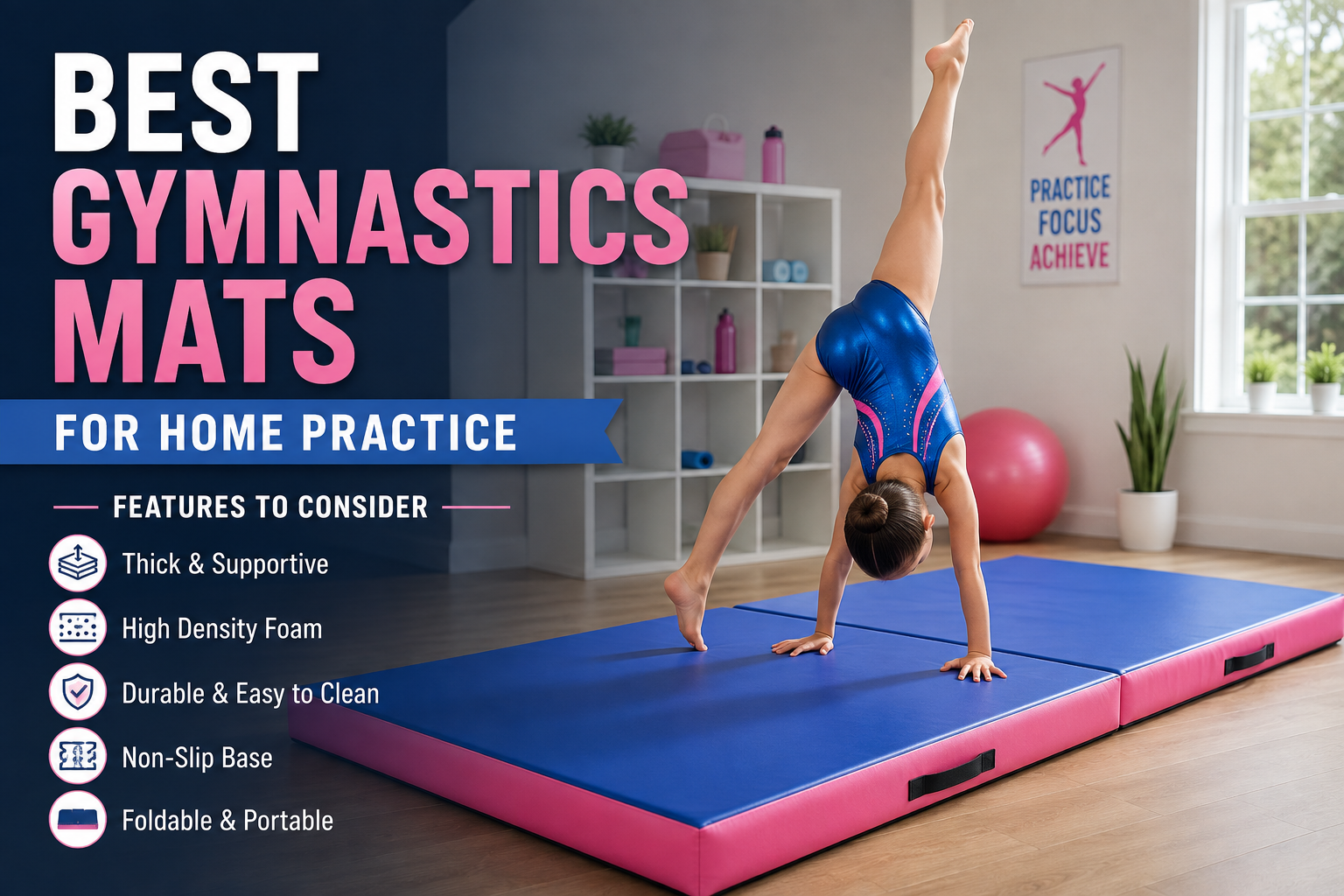
Creating a safe and practical training space at home starts with choosing the right surface. Whether the goal is to practice basic skills, improve flexibility, work on tumbling drills, or build confidence, gymnastics mats can play an important role in making home practice more comfortable and secure.
However, not every training mat is suitable for every athlete or activity. The best choice depends on factors such as thickness, density, size, material, portability, and the type of exercises being performed. Understanding these features before making a decision can help parents, athletes, and coaches create a more effective home training environment.
1. Consider the Type of Home Practice
The first step is to think about how the mat will be used. Home practice can involve many different activities, including stretching, conditioning, cartwheels, handstands, bridges, rolls, and basic tumbling.
A mat designed for light exercise may be suitable for stretching and floor workouts but may not provide enough cushioning for repeated jumps or tumbling practice. On the other hand, a thick crash-style mat may offer excellent impact protection but can be too soft for activities that require stability and balance.
Before choosing a gymnastics training surface, identify the main activities it needs to support. This makes it easier to select the right balance between firmness, cushioning, and stability.
2. Choose the Right Thickness
Thickness is one of the most important features to consider. A thinner surface generally provides greater stability, while a thicker option can offer more protection from impact.
For basic exercises, stretching, and skill drills performed close to the floor, a moderately padded exercise mat may be sufficient. For tumbling, jumping, or practicing new movements, additional cushioning may be more appropriate.
It is important to remember that more thickness does not automatically mean better performance. A surface that is too soft can make it harder to maintain balance, while one that is too firm may not provide enough impact absorption. The ideal choice should match the athlete's skill level and the type of practice being performed.
3. Pay Attention to Foam Density
The inside material matters just as much as the outer surface. Foam density affects how the mat responds when weight or force is applied.
Higher-density foam generally provides better support and can maintain its shape over time. It may be useful for exercises that require a stable base, such as handstands, balance drills, and conditioning movements.
Softer foam can provide more cushioning and may be suitable for controlled landing practice or activities where additional impact absorption is needed. The key is to choose a product that offers enough protection without becoming unstable under the athlete's weight.
For frequent home use, durable foam is especially important because repeated compression can cause lower-quality materials to lose their original shape.
4. Select a Suitable Size
The size of the practice area should influence the size of the mat. Before purchasing, measure the available floor space and consider the amount of room needed around the training surface.
A larger mat can provide more freedom for movement, especially when practicing rolls, cartwheels, or connected floor exercises. However, a large product may be difficult to store in a smaller home.
Foldable options can be useful for families who need to clear the training area after each session. These designs allow the equipment to be stored in a closet, against a wall, or in another convenient location.
When selecting a size, consider both the athlete's movements and the available space around the mat. A safe practice area should not place the gymnast too close to furniture, walls, or other obstacles.
5. Look for a Durable and Easy-to-Clean Cover
The outer cover should be durable enough to handle regular use. Home training surfaces may experience friction, pressure, sweat, and repeated folding or movement.
A strong, easy-to-clean cover can make maintenance much simpler. Materials with a smooth protective finish are often easier to wipe down after practice, helping maintain a cleaner training environment.
Strong stitching is another important feature. Seams and connection points can experience significant stress, particularly on foldable designs. A well-constructed cover can help extend the lifespan of the equipment.
If the mat will be used by multiple family members or stored frequently, durability should be a major priority.
6. Check for Stability and Safety Features
Safety should always be the main consideration when creating a home practice space. The training surface should remain as stable as possible during use.
Some products include non-slip bases or textured surfaces that can help reduce unwanted movement. This can be particularly useful when practicing on smooth floors.
If multiple pieces are used together, make sure they fit securely and do not create dangerous gaps. Training on an uneven or shifting surface can increase the risk of awkward landings.
Regular inspections are also important. Check for tears, damaged seams, compressed foam, or surfaces that have become excessively slippery. Replacing worn equipment when necessary can help maintain a safer practice environment.
7. Think About Portability and Storage
For many households, portability is an important feature. A permanent home gym may not be possible, so equipment that can be folded, carried, or stored easily can be a practical solution.
Foldable training mats are convenient for small spaces, while lightweight options may be easier for parents or young athletes to move. Carry handles can also improve portability.
However, portability should not come at the expense of stability or durability. The best option should be easy to manage while still providing a reliable practice surface.
Brands such as AirTumble may offer options designed around home training needs, but buyers should still compare dimensions, materials, cushioning, and intended use before selecting a particular product.
8. Match the Equipment to the Athlete's Skill Level
Beginners and advanced athletes may have very different requirements.
Beginners often benefit from a stable and appropriately cushioned surface for learning basic body positions and movement patterns. Young gymnasts may also need closer supervision when practicing new skills at home.
More experienced athletes may look for equipment that supports specific drills, tumbling exercises, or conditioning routines. Even skilled gymnasts should avoid attempting advanced skills without appropriate space, equipment, and qualified supervision.
The right home gymnastics mat should support safe progress rather than encourage athletes to practice skills beyond their current ability.
9. Consider Air-Based Training Options
Traditional foam mats are not the only option for home practice. Inflatable training surfaces, including air tracks, can provide a responsive surface for selected tumbling drills and movement practice.
These products can be useful because they may offer adjustable firmness, portability, and relatively convenient storage when deflated. However, users should follow manufacturer instructions carefully and ensure that the equipment is properly inflated before use.
Regular air track practice can also support body awareness and movement control by encouraging athletes to focus on balance, positioning, coordination, and controlled landings. For additional information on this topic, you can read this guide:
How Regular Air Track Practice Can Improve Body Control
As with any training equipment, an air-based surface should be selected according to the available space, intended activity, and athlete's experience level. AirTumble products or similar home training solutions should be evaluated based on their specific construction and safety features rather than brand name alone.
10. Balance Quality and Long-Term Value
Price is an important consideration, but the cheapest option is not always the best value. A poorly constructed training mat may wear out quickly, lose its cushioning, or fail to provide the level of stability needed for regular practice.
Instead of focusing only on the initial cost, consider durability, material quality, ease of maintenance, and expected frequency of use.
A well-made product may remain useful for longer and provide a more consistent training experience. Reading product specifications carefully and comparing features can help buyers make a more informed decision.
Final Thoughts
Choosing the best gymnastics mats for home practice requires more than simply selecting the largest or thickest option available. The ideal surface should match the athlete's training goals while providing an appropriate combination of cushioning, stability, durability, and convenience.
Consider the type of exercises being performed, the available space, foam density, thickness, surface material, storage requirements, and safety features. A carefully selected tumbling mat or training surface can help create a more practical environment for conditioning, flexibility work, and skill development.
Most importantly, home practice should focus on controlled progress. Quality equipment can support training, but it does not replace proper coaching, supervision, or safe skill development.
FAQs
1. What thickness is best for a home gymnastics training mat?
The ideal thickness depends on the activity. Thinner surfaces are generally better for stable floor exercises, while thicker options may provide more cushioning for tumbling and controlled landing practice.
2. Are foldable tumbling mats good for home use?
Yes. Foldable mats can be a practical choice because they are easier to store and move. They are especially useful for homes where the training area must be cleared after practice.
3. Can children practice gymnastics skills at home?
Children can practice appropriate drills, flexibility exercises, conditioning, and basic skills with proper supervision. Advanced skills should only be attempted with suitable equipment, space, and qualified guidance.
4. How do I clean a gymnastics training surface?
Always follow the manufacturer's cleaning instructions. In many cases, the outer surface can be wiped with a suitable cleaner and dried thoroughly before storage or further use.
5. Are air tracks better than traditional foam mats?
Neither option is automatically better. Foam surfaces and inflatable tracks serve different purposes. The best choice depends on the athlete's skill level, available space, intended activities, and desired balance between stability and cushioning.